| |
A Resource by Mark D. Roberts |
|
Why Did Jesus Have to Die?
The Death of Jesus in Different Perspectives:
Roman, Jewish, Jesus, Christian
by Rev. Dr. Mark D. Roberts April-May 2004
Copyright © 2004 by Mark D. Roberts
Note: You may download this resource at no cost, for personal use or for use in a Christian ministry, as long as you are not publishing it for sale. All I ask is that you give credit where credit is due. For all other uses, please contact me at mark@markdroberts.com. Thank you.
My Various Writings on Jesus
The Birth of Jesus: Hype or History?
Was Jesus Divine? The Early Christian Understanding
Why Did Jesus Have to Die?
Was Jesus Married? A Careful Look at the Real Evidence
What Was the Message of Jesus?
How Can We Know Anything about the Real Jesus?
What Languages Did Jesus Speak and Why Does It Matter?
Recovering the Scandal of the Cross?
The Passion of the Christ: An In-Depth Review
Book -- Jesus Revealed: Know Him Better to Love Him Better
Part 1: Introduction
Posted at 10:00 p.m. on Monday, April 19, 2004
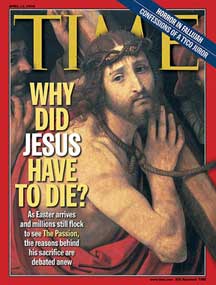
| A couple of weeks ago the cover of TIME magazine asked, “Why Did Jesus Have to Die?” What motivated the editors of TIME to put this question in the spotlight? Partly it was a matter of timing, since the publication date of the magazine fell at the beginning of Holy Week, the time of year when Christians throughout the Western world remember the crucifixion of Christ. (Eastern Orthodox believers use a slightly different calendar.) But the main reason for giving the death of Jesus such prominence was the unprecedented impact of Mel Gibson’s film, The Passion of the Christ, which has now brought in more than $360 million, passing Jurassic Park as seventh on the all-time U.S. box office list. This movie has more people asking questions about the death of Jesus than at any time in recent memory, perhaps more than at any one time in human history. |
 |
In this series I propose to answer the question “Why did Jesus have to die?” At the outset, I must say that this isn’t an easy question to answer for several reasons. Let me mention three.
First, when it comes to the death of Jesus, we’re dealing with an historical event concerning which we have limited historical sources. We don’t have some of the sources that would make our task much easier, the diary of Pontius Pilate, for example, or notes from the proceedings of the Jewish council that examined Jesus. Therefore, when I try to explain why Pilate or certain Jewish leaders believed that Jesus should die, I’ll have to extrapolate from secondary evidence. I do believe, however, that this evidence, both in the New Testament gospels and in other ancient sources, is strong enough to allow us to formulate likely hypotheses concerning Roman and Jewish motivations for the crucifixion of Jesus.
Second, the question of why Jesus was put to death is a matter of considerable scholarly disagreement. For centuries it was common to put all the blame on “the Jews.” But the horror of the Holocaust combined with new historical insights has led scholars in almost completely the opposite direction. Many claim that “the Jews,” even Jewish leaders, had nothing, or at most very little, to do with the death of Jesus. In my opinion the pendulum that had once swung way too far in the direction of “the Jews” has now swung too far back in the opposite “Romans only” direction. I’ll have more to say about this later.
Third, there is not one, simple, obvious answer to the question of why Jesus had to die. From a historical point of view, we have to deal with at least two perspectives, Roman and Jewish. In fact I’ll argue that there was more than one Jewish point of view on Jesus’ death. But historical explanation doesn’t exhaust the realm of discourse when it comes to the reason for Jesus’ death. We also need to deal with the whole area of theology. We’ll want to know why, in light of his understanding of God, Jesus himself believed that he needed to die. Moreover, we must also examine early Christian thinking concerning why Jesus’ death was necessary for the salvation of the world. In the end, therefore, the answer to the simple question “Why did Jesus have to die?” will be anything but simple. It will have multiple layers and nuances.
Nevertheless, this is a task well worth the effort, both in the writing and in the reading. No matter what you think about Jesus, you will help yourself and your world if you’re able to discuss his death intelligently. This is especially true given the tendency of this conversation to become terribly anti-Semitic. In a world where hatred of Jews is on the increase, all thoughtful, compassionate human beings need to be informed about just who was responsible for the death of Jesus and why.
Finally, if, like me, you believe that the crucifixion of Jesus stands at the very center of history, then knowing why Jesus had to die is just about the most important bit of knowledge you can have.
In my next post I’ll lay out some basic parameters for the rest of this series: how I’m going to structure the series and some of the foundational facts upon which I’ll build the structure.
Part 2: Where Do We Start?
Posted at 10:00 p.m. on Tuesday, April 20, 2004
Where should we start in our effort to discover why Jesus had to die? I propose to begin with some basic historical facts, facts that are affirmed by almost every historian and biblical scholar, even those who approach this question from a highly critical and skeptical starting point. So what are these facts:
• Jesus was crucified. There were many ways in the first-century for a criminal to be put to death, including stoning, beheading, being torn apart by beasts, etc. Yet all the earliest sources attest to the crucifixion of Jesus. These sources include, in addition to the New Testament writings, the Jewish historian Josephus (Antiquities 18.3.3, A.D. 95) and the Roman historian Tacitus (Annals 15.44, A.D. 109)
• Jesus was crucified during the governorship and under the authority of Pontius Pilate. Once again, this basic fact is confirmed in Josephus and Tacitus in addition to the New Testament.
|
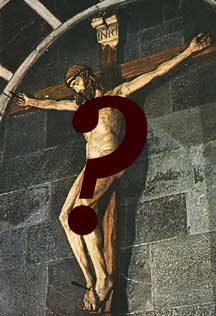 |
• Pilate placed a sign on Jesus’ cross that read “The King of the Jews.” This fact is found in all four New Testament gospels, and in some later non-canonical gospels as well. This “title” helps to explain the nature of the charges against Jesus.
• Jesus was crucified in Jerusalem, on or near the Jewish feast of Passover. Again, all New Testament gospels agree on these basic facts, and there is every reason to believe that they are accurate (though the precise timing of Jesus’ death in relationship to Passover is harder to pin down).
These basic facts, though apparently obvious and unspectacular, will actually prove to be very helpful as we try to figure out the reasons for Jesus’ death.
As I mentioned in my previous post, the question “Why did Jesus have to die?” doesn’t have a simple answer. I propose to address this question from four different perspectives:
• Roman: Why did Pontius Pilate think Jesus had to die?
• Jewish: Why did some Jewish leaders think Jesus had to die?
• Jesus: Why did Jesus himself think that he had to die?
• Early Christian: Why did early Christians think Jesus had to die?
In my next post I’ll begin with the Roman perspective.
Part 3: The Roman Perspective
Posted at 10:00 p.m. on Wednesday, April 21, 2004
The fact that Jesus was crucified rather than stoned, hanged, or killed in some other way means that the Romans were ultimately responsible for his death. Of course this is clear in the biblical gospels. But even if we lacked such primary sources, the simple fact that a man was crucified in Jerusalem around A.D. 30 implies that, for some reasons or other, he was condemned by Roman authorities. Jews in the first-century A.D. didn’t crucify people. This horrible means of execution was the prerogative of the Romans, who used it with chilling effect.
The Roman Practice of Crucifixion
If we want to know why a Roman authority, in this case, the prefect Pontius Pilate, would want to crucify someone, we might look first at the Roman practice of crucifixion in general. Although Rome didn’t invent this means of execution, the nation perfected it as one of the most horrible means of putting capital criminals to death. In fact not all Roman convicts sentenced to death were crucified. This was reserved for the lowest of the low, and most of all for those who threatened Roman power. Commit a serious crime and Rome might cut off your head; rebel against Roman rule or upset Roman peace and you might be headed to a cross. I say “might be” because Roman citizens were protected from crucifixion, unless they happened to be treasonous soldiers.
Why was crucifixion so horrible? For one thing, the victim experienced some of the most extreme pain that a person can experience and the duration of suffering often lasted several days. But, even beyond personal suffering, the crucified person experienced extreme shame in a world that valued honor supremely. Contrary to most portrayals of Jesus’ death, those sentenced to crucifixion were naked when attached to the cross, in full view of the masses.
| The Romans made every effort to crucify people in public places, such as along major thoroughfares. The point was to augment the dishonor and suffering of the one being killed, not to mention his family and colleagues. (It seems, by the way, that the Romans did not crucify women.) As the Roman rhetorician Quintilian explained, “Whenever we crucify the guilty, the most crowded roads are chosen, where most people can see and be moved by this fear. For penalties relate not so much to retribution as to their exemplary effect” (Quintilian, Declamations 274. For this quotation, see the excellent article “Crucifixion in Antiquity: The Evidence” by Joe Zias.). Thus the point of crucifixion was not only punishment, but also deterrence. |
|
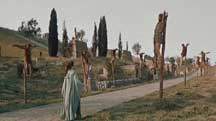
This scene of mass crucifixion is from the movie Spartacus. It depicts something that actually happened. When Spartacus led a rebellion against Rome in 73-71 B.C., the Romans finally prevailed. They crucified 6,000 men, stringing them along the Via Appia for 120 miles, from Rome to Capua.
|
Not surprisingly, the Romans crucified Jews when they rebelled against imperial rule. I’ll examine a couple of telling instances in my next post.
Part 4: Why Did Jesus Have to Die? The Roman Perspective (cont)
Posted at 10:20 p.m. on Thursday, April 22, 2004
In my last post I began to examine the Roman practice of crucifixion, arguing that if we want to understand why a Roman governor had Jesus crucified, we should first understand why Rome used crucifixion in general. What we discovered was that crucifixion, in addition to being an extremely horrific punishment of criminals, was thought to be an effective deterrent against sedition. “Watch someone get crucified for challenging our authority,” the Romans believed, “and you’ll be unlikely to challenge our authority yourself.” If you’ve seen The Passion of the Christ, you can certainly understand Roman logic here.
Roman Crucifixion Among the Jews
The threat of crucifixion didn’t completely squelch attempts to overthrow Roman rule, however, least of all among the Jews. Shortly after the death of Herod the Great in 4 B.C., thousands of Jews sought to toss the Romans out of Judea. Of course the Romans didn’t take kindly to this, sending an army to squash the rebellion. When rebels fled into the country, the Roman general Varus pursued them. The first-century Jewish historian Josephus describes what happened next:
Upon this, Varus sent a part of his army into the country, to seek out those that had been the authors of the revolt; and when they were discovered, he punished some of them that were most guilty, and some he dismissed: now the number of those that were crucified on this account were two thousand. (Antiquities 17.10.10, my emphasis)
Two thousand rebels crucified at one time! Now that would surely give restless Jews second thoughts before challenging Roman tyranny again.
| Seven decades later thousands upon thousands of Jews revolted against Roman rule. For a short time they appeared to have prevailed. But, once again, Rome sent a superior military force to Judea. Soon the Jews were trapped in Jerusalem, surrounded by the Roman army besieging the city. Recognizing their hopeless condition, some Jews actually tried to escape, but to no avail. According to Josephus, when they were caught, “they were first whipped, and then tormented with all sorts of tortures before they died, and were then crucified before the wall of the city” (Jewish War, 5.11.1). This happened to at least 500 people daily, according to Josephus. So disgusting was the mass torture of Jewish prisoners that even the Roman General Titus felt pity on them. But he let the brutality continue. Why? Josephus explains: “The main reason why he did not forbid that cruelty was this, that he hoped the Jews might perhaps yield at that sight, out of fear lest they might themselves afterwards be liable to the same cruel treatment” (Jewish War, 5.11.1). |
|
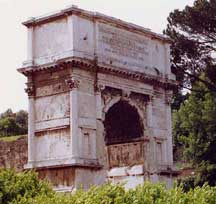
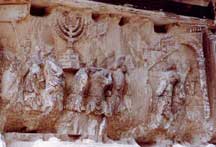
Above: The Arch of Titus in the Roman Forum.
Below: A frieze from inside of the Arch, celebrating the destruction and ransacking of the Jerusalem Temple.
|
|
To conclude what we have learned about Romans and crucifixion, Rome reserved crucifixion for the worst of criminals, especially for those who stirred up rebellion against the state. Because the point of crucifixion, beyond punishment, was deterrence, crosses were placed in public places so people would learn to fear the wrath of Rome. When Jews challenged Roman authority, they, like others rebels against Rome, were crucified if caught.
Did Jesus challenge Roman authority such that Pontius Pilate believed he must be crucified? Does what we have learned about Roman crucifixion help to explain Jesus’ own death? To these questions I’ll turn in my next post.
Part 5: The Roman Perspective (cont)
Posted at 8:30 a.m. on Saturday, April 24, 2004
Introduction to Pontius Pilate
If we’re going to understand the Roman perspective on the death of Jesus, we need to know something of the Roman man who was legally responsible for his crucifixion: Pontius Pilate. Traditionally, Pilate has been seen by Christians in relatively positive terms, as one who really didn’t want to crucify Jesus but who did so because he was compelled to by the Jewish leaders and crowds. This image of Pilate, which seems to emerge from the New Testament gospels, doesn’t fit with what we know about Pontius Pilate from historical sources, including the gospels themselves. Let me survey this evidence briefly.
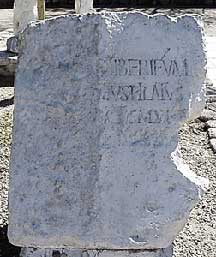
| Pontius Pilate was the governor of Judea from 26-37 A.D. An inscription discovered in the ruins of a Roman theater in Caesarea reveals that Pilate’s official Roman title was “prefect” (Latin, praefectus). In this role he was ultimately responsible for all matters in Judea, including judicial and financial affairs. Pilate governed from the provincial capital of Judea, Caesarea (Maratima), a city on the Mediterranean coast, about 75 miles northwest of Jerusalem. He would make the trip to Jerusalem only when necessary. Pilate was accountable to the governor of Syria, through whom he was ultimately subservient to the Roman Emperor. |
|
This inscription identifies Pontius Pilate as the [Praef]ectus Iuda[eae].
|
Pilate does not figure prominently in first-century Roman histories, which suggests that he was a relatively insignificant leader. In fact, the assignment govern Judea was no plum, and some of those who served in Pilate’s position were known to complain about it. Not only was it potentially a dead-end job, but it was fraught with complications.
The complications had largely to do with what the Romans would see as the peculiarities and propensities of the Jews. The peculiarities were, by and large, Jewish religious sensibilities that put them at odds with Roman norms. And the propensities had to do with general unrest and fairly regular attempts by some Jews to rebel against Roman rule.
Pilate’s inability (or unwillingness) to respect Jewish sensibilities is seen in an event recorded by the Jewish historian Josephus (Antiquities 18.3.1). Unlike previous governors, when Pilate took charge, he brought images of Caesar into Jerusalem in order to display them. This enraged the Jewish population, who took this as a violation of their law and as an insult. Multitudes of people traveled to Caesarea in order to ask Pilate to remove the images. At first he refused and, then the petitioners persisted, he was prepared to kill them. But when they showed themselves willing to die rather than have their laws violated, Pilate finally relented. In another instance when he offended Jewish sensibilities, Pilate did not show mercy, and those who protested were slaughtered by soldiers under Pilate’s command (Josephus, Antiquities, 18.3.2).
The New Testament confirms this picture of a cruel Pilate. In Luke 13:1 we read, “At that very time there were some present who told him about the Galileans whose blood Pilate had mingled with their sacrifices.” We don’t know anything else about this incident. But it appears that, for some reason, Pilate killed some Galileans who had come to the Jerusalem temple in order to offer sacrifices to God. Yet not only did Pilate have them killed, he also had their own blood mingled with the blood of the animals they had sacrificed. Talk about adding insult to injury!
The first-century Jewish philosopher, Philo of Alexandria, once wrote a letter to Caesar, in which, among other things, he complained about the harshness of Pontius Pilate. Philo blames Pilate explicitly for: "briberies, insults, robberies, outrages, wanton injustices, constantly repeated executions without trial, and ceaseless and grievous cruelty." (Legatio ad Gaium, 301-302). Even granting Philo’s bias against Pilate, nevertheless this text doesn’t reflect well upon Pilate’s governorship. In the end, he was removed from office by the Syrian governor, Vitellius, though we don’t know exactly why.
But what about the image of Pilate as the reflective leader who is reticent to kill Jesus, and who even converses with Jesus about the nature of truth? I’ll address this picture in greater detail later. But for now I’d simply observe that the gospel accounts of Jesus’ trial can be read, without lots of slicing and dicing, as confirming the negative image of Pilate.
Pilate’s ultimate responsibility was to oversee Judean affairs, to squash outright rebellion, to keep the tax money flowing to Rome, and, in general, to preserve the fragile peace of the region. And it is this which, above all, seemed to be at risk when Jesus came to Jerusalem around the feast of Passover. In my next post in this series I’ll examine the peculiar dynamics of Jerusalem in the time of the festival.
Part 6: The Roman Perspective (cont)
Posted at 10:30 p.m. on Saturday, April 24, 2004
As I explained in my last post, Pontius Pilate, the prefect of Judea, governed his territory from Caesarea, a city on the Mediterranean sea about 75 miles northwest of Jerusalem. Immediate authority over Jerusalem itself he had delegated to Caiaphas, whom Pilate had appointed high priest of the Jewish temple.
Pilate the the Danger of Passover
But, each year during his tenure in Judea, Pilate journeyed to Jerusalem in the spring. He wanted to be in this city during the Jewish celebration of Passover. It’s not that he had any fondness for the Jews and their rituals, but Pilate needed to be in Jerusalem at this time to preserve order. He didn’t trust Caiaphas with such an important task at such a volatile time.
The Passover was, after all, a festival in which Jews remembered how God had delivered them from foreign domination. During the celebration of the Passover meal they not only thanked God for his deliverance in the past, but also prayed for him to do so again. Thus the Passover itself could easily inspire anti-Roman feelings, if not outright rebellion.
| Moreover, the population of Jerusalem swelled greatly during the festival. Though it’s difficult to determine precisely the population of Jerusalem during the time of Roman rule, 35,000 wouldn’t be too far off base. During the Passover, however, this number swelled by a figure of ten or more. Josephus reports that 2,000,000 to 3,000,000 people gathered in the city for the festival (Jewish War, 2.14.3, 6.9.3). While most scholars believe that Josephus exaggerated, his estimates testify to the large number of pilgrims who came to Jerusalem for Passover. A more conservative estimate would be in the 300,000-400,000 range. Pilate knew that crowds of Jews jammed together in a small area was a formula for disaster. |
 |
A crowd gathered in Jerusalem at the Wailing Wall.
|
Given the themes of Passover and the massive temporary population of Jerusalem, it’s easy to see why Pilate felt it necessary to come to the city and why he would have done so with trepidation. Pilate was well aware of the fact that Jerusalem was a powder keg ready to blow during Passover. In fact Josephus, talking about an earlier ruler who tyrannized the Jews, mentions that “the nation of the Jews made an insurrection against him at a festival; for at those feasts seditions are generally begun” (Jewish War, 1.4.3, emphasis added). Pilate didn’t come to Jerusalem unprepared. To help keep the peace, he brought with him a few thousand Roman soldiers from Syria. But even then the odds would not be in his favor if the Jews decided to stir up rebellion, since the soldiers were outnumbered by a factor of at least one hundred to one.
Given the tenuous peace of Jerusalem, Pilate must have been greatly distressed by early reports about Jesus’ actions in Jerusalem. This popular prophet from Nazareth had been welcomed into the city by a crowd of his followers who hailed him as a conquering king. Then Jesus created a ruckus in the Jewish temple, even prohibiting sacrifices from being offered for several hours. So, while Pilate might have smirked to think of the distress this had given Caiaphas, nevertheless he’d be worried. What was Jesus’ agenda? What had he come to Jerusalem to do? Was he seditious? Was he fomenting rebellion against Rome? Pilate’s initial strategy was to watch and wait. Maybe, just maybe, he’d be lucky, and the Passover would conclude without incident. Then Jesus would go back to Galilee where he came from, and Pilate would return to Caesarea, where he could govern Judea a safe distance away from the time bomb of Jerusalem.
Pilate’s hopes for an uneventful Passover were dashed when, early on Friday morning, the problem posed by Jesus of Nazareth exploded in his face. In my next post I’ll examine more closely Pilate’s interaction with Jesus and his accusers.
Part 7: The Roman Perspective (cont)
Posted at 10:o0 p.m. on Sunday, April 25, 2004
Pilate's Encounter with Jesus and the Jewish Leaders
Early on the Friday morning after Jesus of Nazareth had entered Jerusalem, Pontius Pilate was awakened by a group of Jewish leaders who had brought Jesus to him with the intention of having Jesus crucified. They accused Jesus of “perverting our nation, forbidding us to pay taxes to the emperor, and saying that he himself is the Messiah, a king” (Luke 23:2). When Pilate questioned Jesus, the accused was strangely quiet. Finally the governor cut to the chase. “Are you the king of the Jews?” he asked. “You say so,” was all Jesus said in reply (Luke 23:3). When Pilate observed to the Jewish leaders that their charges against Jesus weren’t persuasive, they added, “He stirs up the people by teaching throughout all Judea, from Galilee where he began even to this place” (Luke 23:5). It’s likely that this was not news to Pilate, who had probably been following the unusual exploits of Jesus for some time. Roman governors kept an eye out for Jewish prophets who announced the coming of God’s kingdom.
| Once the Jewish leaders had brought Jesus to Pilate, the question of his fate lay in the governor’s hands. Certainly he could follow the recommendation of the leaders, including the high priest, Caiaphas, whom he had appointed. But killing Jesus had a considerable downside. Pilate was surely aware of Jesus’ popularity among the people. He might even have known before Friday that the Jewish leaders were trying to do away with Jesus, but were reticent to do so because he was so popular with the people. Killing Jesus might well have incited the people to riot (Mark 14:2), something neither the Jewish officials nor Pilate would have wanted. If Pilate were perceived by the people as the one responsible for the death of their popular prophet, then he might end up causing a ruckus or even a revolt that could very well lead to his own downfall. |
|
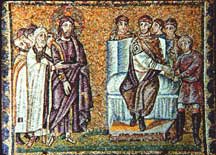
A mosaic of Christ before Pilate from the San Apollinare Nuovo Basilica in Ravenna, Italy.
|
Yet Pilate would surely have preferred to get Jesus out of the way. Though he was not seditious in the ordinary sense -- Jesus carried no weapons, organized no army, and had not assaulted any Roman authorities – nevertheless the Nazarene was clearly a rabble-rouser from Pilate’s point of view. And even if he didn’t explicitly espouse the overthrow of Rome, he certainly flirted with the seditious language of kingship.
Two other factors contributed to Pilate’s reticence to execute Jesus. First, his interaction with Jesus convinced him that the Galilean was no ordinary insurrectionist. It’s hard to reconstruct from the gospel accounts exactly what Pilate thought of Jesus. If he truly believed him to be innocent and no threat to Rome, then it’s unlikely that he would have had Jesus crucified. But Pilate must have seen that Jesus was in a completely different league from the others he had crucified. (Of course I’m aware that Christian tradition paints Pilate as a truth-seeker who genuinely believes in Jesus’ innocence. But this image doesn’t fit what we know about Pilate from history, not to mention the indisputable fact that Pilate himself was, in the end, responsible for Jesus’ death. It’s very hard to imagine that Pilate was bullied, either by Jewish leaders or by the mob, into doing something that he really didn’t want to do. I believe that many of the statements in the gospels that seem to reflect the “noble Pilate” were in fact originally spoken by the governor in order to incite the Jews to accept greater responsibility for Jesus’ death, thus exonerating Pilate. Or, in other cases, I believe Pilate’s tone was ironic or sarcastic. When he asked Jesus, “What is truth?”, Pilate wasn’t beginning a philosophical dialogue, but simply mocking Jesus, who had just spoken of “belonging to the truth” (John 18:37-38).
The second factor that contributed to Pilate’s reticence to execute Jesus was a recommendation from his wife that he should “have nothing to do with” Jesus. Pilate’s wife claimed to have “suffered a great deal because of a dream about him” (Matthew 27:19). Pilate, like most pagans, was in all likelihood quite superstitious, and his wife’s nightmare would have spooked him as well.
From Pilate’s perspective, what would have been the best outcome of this whole mess? Somehow get Jesus to stop causing trouble, but without inciting the people to riot. If silencing Jesus required his death, then so be it, but let it be someone else’s fault other than Pilate's. If Jesus could be shut down by some other means – like flogging – then this would also be an acceptable option.
In my next post I’ll finish explaining the necessity of Jesus’ death from the Roman perspective of Pontius Pilate.
Part 8: The Roman Perspective (cont)
Posted at 10:o0 p.m. on Monday, April 26, 2004
In my last post I began to describe Pontius Pilate’s predicament on the Friday morning after Jesus had entered Jerusalem. The problematic prophet had been brought to Pilate by several Jewish leaders who demanded that he be crucified. But, for reasons I outlined previously, Pilate was reticent. Most of all, he didn’t want to incite the crowds who had gathered in Jerusalem for Passover. Silencing Jesus was a fine idea, but, from Pilate’s perspective, it had to be done in a why that protected him from the wrath of the Jewish people.
Pilate's Decision to Have Jesus Crucified
Pilate tried passing the buck. He told the Jewish leaders to judge Jesus themselves, but they averred that they couldn’t execute him (John 18:31-32). He said, perhaps sarcastically, that they should go ahead and crucify him themselves (John 19:6-7), even though Pilate knew that crucifixion was legal only under Roman authority. At one point during the “trial” of Jesus Pilate tried to pass the buck to Herod Antipas, who, as Tetrarch over Galilee, had the legal right to put Jesus to death. But Herod didn’t grab the bait, and used his meeting with Jesus as an occasion to mock him (Luke 23:6-12).
When the responsibility for Jesus’ fate fell back upon Pilate’s shoulders, he preferred to take the course of least resistance: have Jesus flogged, which would surely silence him for a while, and which, Pilate hoped, would keep the people from going on a rampage. But many of the Jewish leaders, combined with a mob that gathered outside of Pilate’s headquarters, pressed for Jesus’ crucifixion. Three factors seemed to have persuaded Pilate that executing Jesus was the best course of action. First, his reticence to kill Jesus appeared to put his loyalty to the emperor in doubt (John 19:12). Even the slightest appearance of imperial disloyalty could have terminal implications for Pilate. Second, the Jews who had gathered in his courtyard, although a tiny percentage of the current population of Jerusalem, were fervent enough in their desire for Jesus’ death that Pilate believed he could convincingly lay the blame on them. Third, his reticence to crucify Jesus was itself starting to cause a riot, which was the very thing Pilate was attempting to avoid by not executing Jesus (Matt 27:24). So his primary motivation for keeping Jesus alive – maintenance of order -- was no longer valid. Jesus had to die.
In sentencing Jesus to death Pilate revealed himself to be devious, if not spineless. He sent Jesus to the cross. The responsibility for this decision was his – at least from a legal-historical point of view. Yet when announcing Jesus’ fate, Pilate tried to avoid taking responsibility for his action. Symbolically washing his hands in front of the crowd, he said, “I am innocent of this man’s blood” (Matthew 27:24). Of course this wasn’t true. No matter now much others might have urged Pilate to take Jesus’ life, in the end, he and he alone made that fateful decision.
The fact that Pilate had Jesus crucified strongly suggests that he saw Jesus as a threat to Roman order. Though not your ordinary brigand or revolutionary, Jesus proclaimed the kingdom of God (not Caesar) and accepted adulation as a messianic (kingly) figure. Moreover, even if his answers to Pilate were minimal, Jesus didn’t reject the charge that he claimed to be king of the Jews. So, even though Jesus wasn’t your run-of-the-mill Zealot, he was still the sort of person who was dangerous to Rome, and was therefore worthy of death, at least from the Roman point of view. |
|
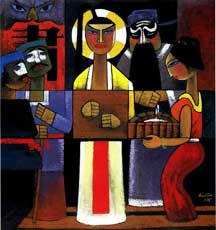
"Pilate Washing His Hands" by the Chinese Christian artist, He Qi. For more information on this artist, see: http://www.heqiarts.com/.
|
Pilate’s legal justification for crucifying Jesus appeared on the sign attached to Jesus’ cross: “The King of the Jews.” The wording and placement of this sign tells us much about Pilate’s ultimate motivation for killing Jesus. On the one hand, Jesus was being crucified because he dared to make a claim to kingship. On the other, by identifying the crucified Jesus as “King of the Jews,” Pilate was mocking Jesus, the Jewish people, and their kingdom aspirations – all in one ironic statement. In a manner consistent with what we know about Pilate from other sources, he was saying, “Here you go, you Jews. Here is your king -- beaten to a pulp, powerless, a victim of superior Roman power.” Furthermore, by crucifying Jesus, Pilate also held him up as a persuasive deterrent: “Next time you think about having someone other than Caesar as your king, remember the crucifixion of Jesus, the King of the Jews.”
From a Roman perspective, why did Jesus have to die?
- Because he disturbed Roman order.
- Because he spoke seditiously of a coming kingdom other than that of Caesar.
- Because he allowed himself to be called “King of the Jews.”
- Because he made a nuisance of himself at the wrong time (Passover), in the wrong place (Jerusalem), in the presence of the wrong people (Pilate and the temple leadership under his command).
- Because his crucifixion would be a powerful deterrent that might keep other Jews from following in his footsteps.
In my next post I’ll begin to look at the death of Jesus from one Jewish perspective.
Part 9: One Jewish Perspective
Posted at 11:40 p.m. on Tuesday, April 27, 2004
Placing This Conversation in Context
Before I proceed to discuss one Jewish perspective on the necessity of Jesus’ death, I must say a bit about the contemporary context for this conversation. For centuries, many Christians hated Jews. Part of their justification for their hatred was their belief that “the Jews killed Christ.” Even though Jesus himself had called his followers to love their enemies, somehow the belief that “the Jews killed Christ” justified a very un-Christ-like hatred of all Jews. This sort of twisted reasoning contributed to the unspeakable horror of the Holocaust, in which over six million Jews were murdered by the Nazis.
The ugly history of anti-Semitism makes it difficult to talk objectively about Jewish involvement in the death of Jesus. If one suggests that some Jews were in some way responsible for Jesus’ death, this person runs the risk of being labeled anti-Semitic. When I was in graduate school, I was encouraged to ask all sorts of creative and critical questions about early Christian history. But when it came to the death of Jesus, there was an unspoken rule that prohibited even discussing the possibility of some Jewish responsibility for the death of Jesus. The party line was that the Romans killed Jesus for their own reasons and that the early Christians made up the parts of the passion narrative that implicate Jews. The Christians did so, we were told, partly because they weren’t getting along with Jews during the latter half of the first-century A.D., and partly because they wanted to improve their relationship with the Roman Empire. This theory – filled with more holes than Swiss cheese – was something my colleagues and I were not welcome to examine critically. It was simply off limits. The painful history of anti-Semitism required that the history of early Christianity be told in a certain way, whether it actually happened that way or not. If you listened to some of the scholars who criticized The Passion of the Christ, you heard evidence of the scholarly bias I’m describing here. It is still the party line in many academic circles.
Therefore, before I discuss Jewish involvement in the death of Jesus, I must say three things quite clearly:
1. Anti-Semitism is wrong. From a Christian perspective, it is a sin. No matter who was actually responsible for the death of Jesus, there is no excuse for anti-Semitism. It’s something that Christians and all sensible people should oppose.
2. Even if “the Jews” were completely responsible for Jesus’ death (which I’ve already shown to be false), this would in no way justify anti-Semitism today.
3. Even if a Christian considered “the Jews” to be his or her enemies, that Christian would be compelled by the very words of Jesus to love the Jews, not to hate them.
Therefore, anti-Semitism is morally wrong, unjustifiable, and unchristian. |
|
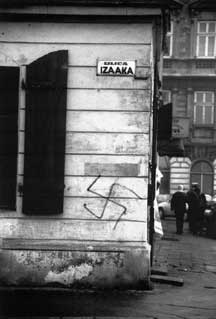
Swastika in former Jewish quarter of Cracow, Poland. |
As you can infer from this introduction, I am going to argue that some Jews were involved in the crucifixion of Jesus, and that they believed that Jesus had to die. But, I think it’s historically incorrect to speak of “The Jewish Perspective” on the necessity of Jesus’ death. If we wish to be accurate, we must talk in terms of “One Jewish Perspective” on the question: “Why did Jesus have to die?” I’ll explain what I mean in my next post.
Part 10: One Jewish Perspective (cont)
Posted at 9:30 p.m. on Wednesday, April 28, 2004
Why “One” Jewish Perspective
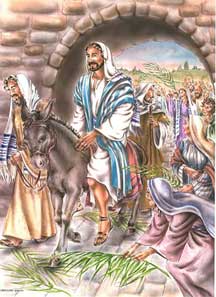
| As a young Christian I had a clear picture of what happened to Jesus in the last week of his life. This picture resulted from my knowledge of the gospels, and, to a great extent, from images I had seen in Sunday School booklets and filmstrips. My mind had been impressed with scenes of Jesus’ triumphal entry into Jerusalem on Palm Sunday, of his “trial” before Pilate, and of his being assaulted by Jewish leaders. These images led me to believe that Jerusalem in the time of Jesus was a relatively small town inhabited by a relatively small number of Jews, and that the same Jews who had welcomed Jesus into town as a king on Sunday had turned against him on Friday. From my juvenile viewpoint, “the Jews” of Jerusalem had, as a single group, both hailed Jesus and condemned him. Since only a few close disciples supported Jesus until the bitter end, it seemed appropriate to speak of “the” Jewish perspective on why Jesus had to die. |
|
From a Sunday School curriculum for children.
|
I no longer believe that my youthful picture of Jesus’ last week was historically accurate. For one thing, the actual scale of life in Jerusalem was far greater than anything I had imagined. As I explained in Part 6 of this series, it’s likely that the normal population of Jerusalem in the time of Jesus was around 35,000. But during the festival of Passover the population swelled to eight or ten times that number, perhaps even more.
This means, among other things, that a tiny percentage of the overall population of Jerusalem actually welcomed Jesus into the city on Palm Sunday or called for his crucifixion early on Good Friday. Since scholars cannot agree on the precise location of Pilate’s headquarters, we cannot say definitively how many people might have gathered in his courtyard to call for Jesus’ death. This number is probably less than 500, possibly quite a bit less. What this means, therefore, is that something like .2% of the Jews in Jerusalem were demonstrably eager to have Jesus crucified.
But, one might object, perhaps this tiny percentage represented the majority. This objection is unlikely for three reasons. First, we know from the gospels that Jesus was, for the most part, very popular among the masses (for example, Matt 4:25; 8:1; 9:8; 12:15; 13:2; 14:14; 15:30; 20:29; 21:8). Second, we also know that the Jewish leaders in Jerusalem who wanted to have Jesus killed hesitated because Jesus was so popular among the masses there (Matt 21:46). Nothing in the gospel records suggests that this popularity ended by Good Friday. Third, in fact the gospel records suggest that large numbers of Jews were deeply distressed by the death of Jesus. For example, as Jesus was walking along the Via Dolorosa, Luke tells us that “A great number of the people followed him, and among them were women who were beating their breasts and wailing for him” (Luke 23:27). Then, after Jesus was crucified, the crowds who “saw what had taken place, . . . returned home, beating their breasts” (Luke 24:48). In other words, vast numbers of Jews were horrified by the death of Jesus.
Thus it’s historically accurate to speak, not of “the” Jewish perspective on the necessity of Jesus’ death, but of several Jewish perspectives. It’s quite likely that the majority didn’t want Jesus killed at all. But the perspective that mattered most was that of Caiaphas and other principal leaders of Jerusalem. This is the “one” perspective I’ll begin to examine in my next post.
Part 11: One Jewish Perspective (cont)
Posted at 10:00 p.m. on Thursday, April 29, 2004
The Perspective of Jewish Leaders in Jerusalem
Although the majority of Jews in Jerusalem may not have wanted Jesus to die, or may have had no opinion either way, some of the most influential Jews did see Jesus’ death as necessary. All four New Testament gospels testify to the key role of the “chief priests” and other Jewish leaders in the effort to have Jesus crucified. The chief priests included the high priest Caiaphas, who was appointed by Pilate, and other priests who provided leadership, not only for the temple, but for all religious and civic affairs in Jerusalem. Some other learned and powerful Jewish leaders joined with the chief priests in the effort to silence Jesus once and for all.
Although not providing specific names or titles, the first-century Jewish historian Josephus concurs with what we find in the New Testament. In his Jewish Antiquities Josephus devotes a short section to the antics of Pontius Pilate. In this context the historian writes that Pilate, “at the suggestion of the principal men amongst us,” had Jesus “condemned to the cross” (Antiquities 18.3.3). Unfortunately Josephus does not explain why these “principal men,” presumably the chief priests and other leaders, had it in for Jesus.
| Why did leading Jews in Jerusalem believe it was necessary for Jesus to die? Part of the answer to this question comes from the Gospel of John, in a scene where a group of Jewish leaders was debating the problem of Jesus’ problematic popularity. “If we let him go on like this,” they said, “everyone will believe in him, and the Romans will come and destroy both our holy place and our nation” (John 11:48). Jesus was stirring up the people with his message of God’s kingdom and with his mighty deeds, and he wasn’t the first to walk down this perilous road. Others had done so before him and the result hadn’t been good for the Jews. Inevitably the Romans swept into Judea with their armies, slaughtering some, crucifying others, and taking still others into slavery. They had no hesitation about destroying an entire city if only some its residents had challenged Roman authority. So it would be logical for Jewish leaders to fear that Jesus might indeed bring down Roman wrath upon both the temple and the nation. |
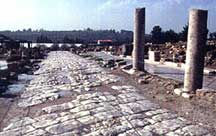 |
These are ruins from the town of Sepphoris in Galilee. Shortly after Jesus was born, a man named Judas led a makeshift militia in a successful assault against the royal palace. Of course Rome didn't wink at Judas and his gang. Ultimately the Roman army recaptured Sepphoris, taking all of its residents as slaves and burning the city to the ground. (See my book Jesus Revealed, p. 104)
|
In the midst of this debate about the problem of Jesus, John records the counsel of the high priest, Caiaphas: “You know nothing at all! You do not understand that it is better for you to have one man die for the people than to have the whole nation destroyed” (John 11:50). Since Caiaphas did not believe that Jesus fit the job description of God’s messiah, and since he shared with his colleagues the fear of Roman reprisals against the Jews, his argument made sense. Better that Jesus should die than the whole nation be destroyed.
When Caiaphas and his cohort finally captured Jesus and brought him to Pilate so that he might be crucified, their accusations touched upon several ways he was endangering the Jewish people. “We found this man perverting our nation,” they said, “forbidding us to pay taxes to the emperor, and saying that he himself is the Messiah, a king” (Luke 23:2). When Pilate was underwhelmed, they added, “He stirs up the people by teaching throughout all Judea, from Galilee where he began even to this place” (Luke 23:5). In other words, Jesus was both undermining orderly Roman rule (forbidding taxes, claiming to be king, stirring up the people) and seducing the Jewish people to abandon their religious commitments (keeping the Sabbath, offering sacrifices in the temple, separating themselves from “sinners”).
Although we Christians may want to argue that these accusations were false, it’s easy to see how, from the perspective of the Jewish leaders, they appeared to be true, dangerously true. Moreover, we find in Jewish sources basic confirmation of what Luke puts upon the lips of the leaders. In the Babylonian Talmud (a fifth-century collection of earlier Jewish oral traditions), we read the following:
There is a tradition: They hanged Yeshu on the Sabbath of the Passover. But for forty days before that a herald went in front of him (crying), “Yeshu is to be stoned because he practiced sorcery and seduced Israel and led them astray from God”. (b. Sanhedrin 43a)
Although the details don’t fit perfectly with the New Testament accounts, the charges against Jesus confirm what we have already seen. Jesus was said to “practice sorcery,” which is how his miracles would have appeared to his opponents, and which explains his ability to arouse the people. He also “seduced Israel and led them astray from God.” How similar this is to the charges in Luke 23, where Jesus was said to have perverted the nation and stirred up the people.
The concerns of Jewish leaders and their desire to get rid of him would probably not have come to fruition except for something Jesus did to provoke their concerted effort to have him crucified. I’ll examine this action in my next post.
Part 12: One Jewish Perspective (cont)
Posted at 10:30 p.m. on Sunday, May 2, 2004
The "Crime" of Jesus
My last post in this series focused on the reasons why some Jewish leaders in Jerusalem believed that it was necessary for Jesus to die. The bottom line? He was a threat to their conception of faith and national life, indeed, to the very existence of the Jewish people. If left unchecked, Jesus would either pervert the Jewish nation with his peculiar notions of the kingdom of God, or he would bring down the wrath of Rome upon Judea, leading to its destruction. Either way, Jesus needed to be taken out of the game – permanently.
The concerns of the Jewish leaders, however pressing they might have been, would probably not have been enough to bring about Jesus’ execution except for something Jesus himself did, something shocking, unexpected, and utterly unacceptable from the perspective of the Jewish leaders. I’m speaking of his activity in the temple, that which Christians call “the cleansing of the temple.” Here’s Mark’s account of this scandalous action:
Then they came to Jerusalem. And he entered the temple and began to drive out those who were selling and those who were buying in the temple, and he overturned the tables of the moneychangers and the seats of those who sold doves; and he would not allow anyone to carry anything through the temple. He was teaching and saying, “Is it not written, ‘My house shall be called a house of prayer for all the nations’? But you have made it a den of robbers.” (Mark 11:15-17)
How did the Jewish leaders respond to Jesus’ action? “And when the chief priests and the scribes heard it, they kept looking for a way to kill him” (Mark 11:18).
Why was Jesus’ behavior in the temple worthy of death? First of all, he was suggesting that the current state of the temple was unacceptable, and that the temple leadership – the chief priests – were unworthy of respect. They were like a bunch of robbers. Second, Jesus actually prohibited the crucial function of the temple: the offering of sacrifices. From the point of view of the priests, he was keeping the Jewish people from worshipping God in the way God had prescribed – a serious if not a capital offense. Third, Jesus’ activity in the temple was consistent with his earlier actions, whereby he implied that the temple was no longer necessary. If Jesus himself could forgive sins (Mark 2:1-12), then why bother with the temple? Thus Jesus was saying to a temple-centered religion: The very center of your relationship with God is wrong. Such a critique would not be taken lightly by those who embraced a temple-centered Judaism.
| But it wasn’t only what Jesus did in the temple that provoked a negative response from the leaders, but also what he said. You see, by referring to the temple as a “den of robbers,” Jesus was doing far more than insulting the chief priests. He was actually quoting from the prophet Jeremiah. In Jeremiah 7, the prophet condemned the tendency of Israel to put their faith in the existence of the temple. Many in Jeremiah’s day believed that they could do all sorts of evil deeds without fear of punishment because God’s temple was in their midst. The temple was their spiritual safety net, so to speak. But God was neither fooled nor pleased. So, through Jeremiah the Lord prophesied, |
|
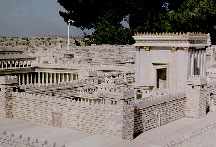
A model of the temple. Part of an exhibit of the Holyland Hotel in Jerusalem.
|
Here you are, trusting in deceptive words to no avail. Will you steal, murder, commit adultery, swear falsely, make offerings to Baal, and go after other gods that you have not known, and then come and stand before me in this house, which is called by my name, and say, “We are safe!” – only to go on doing all these abominations? Has this house, which is called by my name, become a den of robbers in your sight? . . . And now, because you have done all these things, says the LORD, . . . therefore I will do to the house that is called by my name . . . just what I did to Shiloh. (Jer 7:8-14, emphasis added).
And what did the Lord do to Shiloh? He destroyed it and the tabernacle it once housed (Psalm 78:60).
In the day of Jeremiah the people turned the temple into a “den of robbers,” a place of supposed safety for those who did evil deeds out in the world. For this reason, God promised to destroy the temple, which he did in 586 B.C. Similarly, by quoting from Jeremiah 7 as he overturned the tables in the temple, Jesus implied that the same judgment applied in his day. Those who took refuge in the temple could not presume to be safe. God was about to destroy the temple because of the sin of the people, even as he had done to Shiloh and to the first temple in Jerusalem.
Thus Jesus’ action in the temple, combined with his words, not only insulted and upset the chief priests, but also conveyed God’s judgment upon the temple itself. This crime against the temple could not be tolerated, as far as its leaders were concerned. The criminal deserved, not only to be silenced, but also to die. In my next post I’ll examine two fascinating parallels that will help us to see that the Jewish leaders who condemned Jesus were acting in ways fully consistent with their predecessors and successors. Right or wrong, they were doing exactly what Jewish leaders in their position had done and would do again. They thought they were defending God’s temple and, indeed, God himself.
Part 13: One Jewish Perspective (cont)
Posted at 10:30 p.m. on Monday, May 3, 2004
Jewish Leaders Respond to Offenses Against the Temple
In my last post I suggested that one of the major causes of Jesus’ death was his “cleansing” of the temple. By interrupting the sacrificial system and by quoting Jeremiah’s own condemnation of the temple, Jesus was threatening the very core of Judaism in his day. In the perspective of the Jewish leaders, this would have been blasphemy – speaking against God himself.
For those whose experience and viewpoint is far removed from that of the Jewish leaders in Jerusalem, it may seem that their intended punishment simply doesn’t fit the crime. But, if we look for historical parallels, we find two incidents in which other leaders acted much as did Caiaphas and his associates when dealing with Jesus.
The first example comes from the ministry of Jeremiah, some 600 years before Jesus. The Lord told Jeremiah to stand in the Jerusalem temple and speak the following:
“If you will not listen to me, to walk in my law that I have set before you, and to heed the words of my servants the prophets whom I send to you urgently – though you have not heeded – then I will make this house like Shiloh, and I will make this city a curse for all the nations of the earth” (Jeremiah 26:4-6).
What response did this prophecy spark in the Jewish leaders and others? Sorrow? Repentance? Hardly! In fact, here’s what happened: |
|
Rembrandt's painting of "Jeremiah Lamenting the Destruction of Jerusalem" (1630).
|
And when Jeremiah had finished speaking all that the LORD had commanded him to speak to all the people, then the priests and the prophets and all the people laid hold of him, saying, “You shall die!” (Jeremiah 26:8)
There it is, the same pattern we see in the last days of Jesus: Speak judgment on the temple and the leaders will believe that you need to die. In the case of Jeremiah, however, he insisted that he was only passing on God’s own message, so the people spared his life (Jer 26:12-16).
Now jump forward in history more than six centuries, to an incident that occurred about thirty years after the death of Jesus. Curiously enough, this incident involved another man named Jesus, son of Ananus (Hananiah), who came to Jerusalem during a feast an began to cry out “against Jerusalem and the holy house.” According to the Jewish historian Josephus, Jesus’ persistent proclamation of judgment on the temple and city offended “certain of the most eminent among the populace,” which is to say, the leaders of Jerusalem. So at first they beat Jesus severely. But when this didn’t shut him down, they brought Jesus to the Roman procurator “where he was whipped [flogged] till his bones were laid bare.” When even this didn’t silence Jesus, the procurator dismissed this Jesus as a madman and a nuisance. (The story of this Jesus can be found in Josephus’s Jewish War, 6.5.3.)
In this case of Jesus ben Hananiah, the Jewish leaders seem not to have pressed for his crucifixion. Of course this Jesus didn’t pose the same threat as Jesus of Nazareth once did, nor did he do anything resembling the cleansing of the temple. Yet merely by proclaiming God’s judgment on the temple earned Jesus son of Ananus several beatings, including what must have been an almost fatal Roman flogging. And, like Jesus of Nazareth, the Jewish leaders dealt with him, first on their own, and then by handing him over to the Roman governor.
The experiences of Jeremiah and Jesus ben Hananiah, though different in detail and time period, nevertheless illustrate how Jewish leaders were apt to deal with those who spoke against the temple. They were worthy of severe punishment, if not death. And when the Jewish leaders no longer had the authority to execute someone, they would turn him over to the Roman governor. Thus the actions of Caiaphas and his associates in response to the problem of Jesus of Nazareth reflect the same commitments and tendencies of similar leaders in similar positions. This greatly increases the likelihood that the historical scenario I have been proposing is in fact accurate.
In my next post I’ll sum up what we have learned about “one” Jewish perspective on the necessity of Jesus’ death.
Part 14: One Jewish Perspective (cont)
Posted at 10:00 p.m. on Wednesday, May 5, 2004
Summing Up One Jewish Perspective
In the last five posts I’ve been examining “one” Jewish perspective on the necessity of Jesus’ death. Let me briefly summarize my findings, adding some observations along the way.
1. It’s more accurate to speak of “one” Jewish perspective on the necessity of Jesus’ death than to speak of “the” Jewish perspective because not all Jews agreed with the viewpoint of those who conspired to have Jesus crucified. Only a tiny percentage of Jews in Jerusalem were actually involved in the effort to persuade Pilate to execute Jesus. Moreover, the New Testament gospels attest to the widespread popularity of Jesus among his Jewish contemporaries. “A great number” of those in Jerusalem at the time of Jesus’ death were horrified by what had happened to him (Luke 23:27).
2. Some of the leading Jews in Jerusalem, including Caiaphas, the High Priest, sought to have Jesus crucified. Evidence for this comes not only from all four New Testament gospels, but also from the Jewish historian Josephus.
3. The Jewish leaders who sought to have Jesus crucified believed that his death was necessary for the following reasons:
a. By stirring up the people, Jesus was threatening the peace and life of the Jewish people, thus increasing the likelihood that Rome would destroy both Jerusalem and the temple. The death of Jesus would be preferable to the destruction of the nation.
b. Jesus “seduced Israel and led them astray from God” (Babylonian Talmud, Sanhedrin 43a). His message and ministry lessened the people’s commitment to living out their Judaism in the way approved of by the Jewish leaders (priests, Pharisees).
c. Jesus interrupted the orderly system of sacrifices in the Jerusalem temple, speaking against the temple and its leaders, thus opposing not only the core of Judaism, but God himself. Jesus’ quotation from Jeremiah 7 (“den of robbers”) combined with other things he had said during his ministry clarified his condemnation of the temple – a blasphemous offense. Moreover, he insisted that God was one his side, thus adding blasphemy to blasphemy. |
|
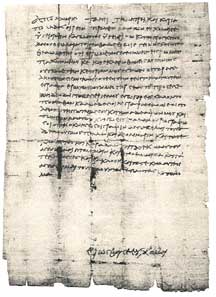
A page from the Babylonian Talmud, with colors added. Pink text in center is the Mishah, the oldest part of the Talmud (2nd cent. AD). Below that is the Gemara, from sixth-century Babylon. The other material is mostly commentary by famous rabbis. To learn more about the Talmud, check this helpful website.
|
d. Jesus presented himself as the Messiah, the one anointed by God to bring divine salvation to Israel. But he failed to do what the Messiah was supposed to do, notably, lead a successful revolt against Rome. Instead, Jesus turned his judgment against God’s own temple. Thus Jesus was a false messiah. This fact alone might not have warranted his crucifixion. But, when combined with his other offenses, it his false claim to messiahship increased further the chances that his actions would bring devastation upon Judea.
4. The efforts of Jewish leaders to silence Jesus by physical violence were consistent with what other Jewish leaders did in similar situations (vs. the prophet Jeremiah in Jer 26 and vs. Jesus ben Hananiah in Josephus, Jewish War, 6.5.3). This consistency greatly increases the probability that the gospel accounts accurately portray the role of Jewish leaders. Caiaphas and company did exactly what Jewish leaders in their position thought they had to do when someone insulted or threatened the temple.
Implications for the Current Debate
Given this picture of “one” Jewish perspective on the necessity of Jesus’ death, I want to draw out two implications.
First, it is historically irresponsible to say, “The Jews killed Christ.” Yes, I’m aware that the Gospel of John uses “the Jews” in a way that seems to lay blame for Jesus’ death upon “the Jews.” But, when read in context, “the Jews” means “some Jewish leaders.” Ultimate and legal blame for Jesus’ death fell upon the shoulders of Pontius Pilate, no matter how he might have tried to wriggle out of it. Moreover, many, and quite probably the vast majority of Jews in the time of Jesus did not want him killed, and were horrified when it happened. Given the tragic history of Christian anti-Semitism, we Christians must speak carefully and accurately about Jewish involvement in his death. The truth: some Jews believed Jesus had to die and sought to convince Pilate to crucify him.
Second, it is historically irresponsible to deny all Jewish involvement in the death of Jesus. Some scholars, no doubt responding to the horrors of anti-Semitism, have applied their critical scalpels to the New Testament records, cutting from them any implication of Jewish complicity in the death of Jesus. In their surgery, however, they bleed historical probability to death. In fact two Jewish sources, Josephus and the Talmud, indicate that some Jews were involved in the death of Jesus and help us to understand why they would have been. Plus, the picture of Caiaphas and his associates in the gospels makes historical and logical sense. These leaders were protecting that which they believed to be essential, including both the temple and their own civic/religious position. The actions of other leaders in similar situations confirm the conclusion that the New Testament gospels paint an historical reliable picture of Jewish involvement in the death of Jesus.
Finally, there was another Jewish perspective on the necessity of Jesus’ death, a perspective I haven’t yet mentioned. It was the most important Jewish perspective of all, that of Jesus himself. To the question of why Jesus believed he had to die I’ll turn in my next post in this series.
Part 15: The Perspective of Jesus
Posted at 10:30 p.m. on Thursday, May 6, 2004
Setting Up the Problem
According to the New Testament gospels, Jesus fully expected that he would be tortured and killed. Yet he spoke of his death, not merely as something that would happen, but as something that must happen. So, for example, in Mark 8 we read, “Then he began to teach them that the Son of Man must undergo great suffering, and be rejected by the elders, the chief priests, and the scribes, and be killed, and after three days rise again” (8:31). On numerous occasions Jesus predicted his pending death in Jerusalem (Mark 9:31; Mark 10:33-34), yet he did nothing to prevent it. In fact, his actions in Jerusalem – cleansing the temple, failing to flee from those who sought to arrest him -- if anything, propelled him to the cross. Yet the big question is: Why? Why did Jesus believe that it was necessary that he die?
This isn’t an easy question to answer because, though Jesus was clear about the inevitability and necessity of his death, he wasn’t nearly so clear about his reasons. His lack of clarity explains, among other things, the fact that his own disciples did not understand his predictions of his death. They were confused about what was going to happen and why. So if they didn’t figure out the reason for Jesus death – at least before it happened – how can we hope to discern Jesus’ intentions?
Jesus’ perspective on his death emerges from a few things he said prior to his death and well as something he did, something that serves as his ultimate explanation. I want to begin by looking at what Jesus said before examining this telltale action.
Out of Obedience to the Father’s Will
In the Gospel of John Jesus makes it clear that he is choosing to die. Nobody is forcing him to do it:
For this reason the Father loves me, because I lay down my life in order to take it up again. No one takes it from me, but I lay it down of my own accord. I have power to lay it down, and I have power to take it up again. I have received this command from my Father. (John 10:17-18)
Here, alongside Jesus’ claim that he freely gives up his life, is the observation that he has “received this command from [his] Father.” So, one major reason Jesus believed that he must be killed is that he also believed this to be the will of his Heavenly Father.
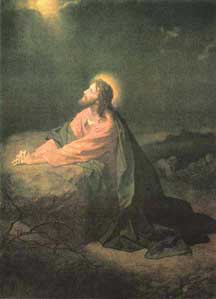
This observation is confirmed in the Garden of Gethsemane, where Jesus asks his Father to “remove this cup” from him. Yet, he adds, “not what I want, but what you want” (Mark 14:36). In other words, Jesus asks not to have to go to the cross, but he perceives this to be the will of his Father in heaven. Thus he offers up his life out of obedience.
Although this begins to answer the question of why Jesus thought his own death was necessary, it doesn’t tell us what Jesus thought he might be accomplishing through his death. To this issue I’ll turn in my next post. |
|
Part 16: The Perspective of Jesus (cont)
Posted at 10:30 p.m. on Friday, May 7, 2004
Drinking the Cup
In Mark 10 Jesus not only speaks of his pending death, but also suggests reasons for this death. In verse 33 he says to his disciples,
“See, we are going up to Jerusalem, and the Son of Man will be handed over to the chief priests and the scribes, and they will condemn him to death; then they will hand him over to the Gentiles; the will mock him, and spit upon him, and flog him, and kill him; and after three days he will rise again.”
Immediately following this prediction, James and John, two of Jesus’ closest followers, approach him asking for a favor. “Grant us to sit, one at your right hand and one at your left, in your glory” (10:37). This request would be comical were it not so sad. Jesus has just spoken of his suffering and those near and dear to him are worried about their own glory in the coming kingdom. Jesus responds by telling them that they don’t know what they’re asking. “Are you able to drink the cup that I drink, or be baptized with the baptism that I am baptized with?” he inquires (Mark 10:38). Of course James and John think they are able, though they have no idea what Jesus is talking about.
But what is Jesus talking about? What is the cup that he drinks? To answer this question we must look to the Old Testament. There, the metaphor of the cup stands for that of which our life is filled. Our “cup” can be filled with blessing and salvation (Psalm 23:5; 116:13); or it can be filled with wrath and horror (Isa 51:17; Ezek 23:33). Frequently the cup stands for God’s judgment and wrath. Consider, for example, Isaiah 51:17:
Rouse yourself, rouse yourself!
Stand up, O Jerusalem,
you who have drunk at the hand of the LORD
the cup of his wrath,
who have drunk to the dregs
the bowl of staggering.
Similarly, through the prophet Ezekiel the Lord speaks of the judgment about to fall upon Jerusalem:
You shall drink your sister’s cup,
deep and wide;
you shall be scorned and derided,
it holds so much.
You shall be filled with drunkenness and sorrow.
A cup of horror and desolation
is the cup of your sister Samaria;
you shall drink it and drain it out,
and gnaw its sherds,
and tear out your breasts. (Ezek 23:32-34)
|
 |
Thus when Jesus speaks of drinking the cup, he is alluding to these images from the Scriptures. By going to the cross, he will drink the cup of God’s wrath. He will bear divine judgment, that which rightly falls upon Israel, and, indeed upon all humanity.
That Jesus uses “the cup” in reference to his crucifixion is made especially clear in the Garden of Gethsemane, when he prays, “Abba, Father, for you all things are possible; remove this cup from me; yet not what I want, but what you want” (Mark 14:36). Nevertheless, in the Garden Jesus chose to drink the cup, to take upon himself the judgment of God, so that God’s salvation might be poured out upon humankind. His death was necessary, Jesus believed, not only because the Father willed it, but also because in this way he would fulfill his calling has Israel’s Messiah and, indeed, the world’s Savior.
Part 17: The Perspective of Jesus (cont)
Posted at 10:00 p.m. on Monday, May 10, 2004
The Serving Son of Man
In my last post in this series I examined a passage from Mark 10 where James and John ask to be given places of honor and power in the kingdom of God. Jesus responds by asking, “Are you able to drink the cup that I drink?” (Mark 10:38). Drinking the cup, I explained, is a symbol of receiving God’s judgment. Jesus will drink the cup in the sense that he will take upon himself the penalty for human sin by dying on the cross.
When the rest of the disciples hear what James and John asked, they become angry, presumably because they also desire positions of honor in Christ’s kingdom. In response to them Jesus says,
“You know that among the Gentiles those whom they recognize as their rulers lord it over them, and their great ones are tyrants over them. But it is not so among you; but whoever wishes to become great among you must be your servant, and whoever wishes to be first among you must be slave of all. For the Son of Man came not to be served but to serve, and to give his life a ransom for many.” (Mark 10:42-45)
Once again Jesus speaks of himself as the Son of Man. And once again he says things that would have been confusing and troubling to his disciples. Earlier in Mark, Jesus said that his mission as the Son of Man involves suffering and dying (Mark 8:31; 10:33-34). When he said this in Mark 8, Peter actually began to rebuke him, presumably because he thought Jesus was speaking nonsense (8:32). |
|
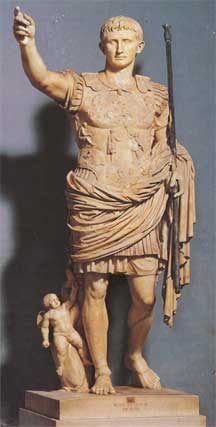
An oversized statute of Augustus Caesar, in which he bears many traits reserved for the gods.
|
Indeed, what many Jewish people in the time of Jesus believed about the Son of Man was completely opposite to Jesus’ own conception of his destiny as the Son of Man. In Jewish speculation, the Son of Man was a supernaturally-empowered human being who would come in the last days to execute divine judgment on earth. (See the chapter on the Son of Man in my book, Jesus Revealed.) This was based on the vision in Daniel 7, where “one like a son of man” (literal translation of the Aramaic original) comes before the throne of God. “To him,” Daniel relates, “was given dominion and glory and kingship, that all peoples, nations, and languages should serve him. His dominion is an everlasting dominion that shall not pass away, and his kingship is one that shall never be destroyed” (7:14). Notice that, in Daniel’s vision, the “one like a son of man” is served by all people as he receives an everlasting kingdom.
Jesus inverts this picture by saying that he, as the Son of Man, “came not to be served but to serve” (10:45). Ultimately Jesus, as the Son of Man, will come in “great power and glory” (Mark 13:26). The time will come when he will be served by all humankind, indeed, all creation (Philippians 2:5-11). But Jesus’ first step is not toward obvious glory, but toward servanthood, indeed, toward the shame of the cross (which is, ironically, his glory).
Given how different this picture of the Son of Man is from what first-century Jews expected, you may wonder where he got this picture. To be sure, it could have been a brand new revelation. But in fact there is some precedent in Judaism for the notion of someone giving his life for the sake of others, even if this someone is not the Son of Man. To this precedent I’ll turn in my next post as I consider how the Son of Man will serve by giving his life “a ransom for many.”
Part 18: The Perspective of Jesus (cont)
Posted at 10:00 p.m. on Tuesday, May 11, 2004
A Ransom for Many
In my last post I discussed the statement of Jesus: “For the Son of Man came not to be served but to serve, and to give his life a ransom for many” (Mark 10:45). I talked about how this idea of the serving Son of Man was radically inconsistent with first-century Jewish expectations. But even more shocking was Jesus’ revelation that he, as the Son of Man, was going to give his life “a ransom for many.” Where in the world did Jesus get this idea? And what did he mean by “a ransom for many”? (If you’ve been reading my blog for a while, the following will be a bit of déjà vu. This is an edited version of a portion of my earlier series, “What Was the Message of Jesus?”)
| Jesus wasn’t the first Jew in his time of history to speak of giving up one’s life for the sake of others. A century and a half before Jesus, Mattathias, the father of Judas Maccabeus and his brothers, urged his sons to “show zeal for the law, and give your lives for the covenant of our ancestors (1 Maccabees 2:50). The Maccabean brothers were to fight to the death for the sake of their faith. Even closer to Jesus’ understanding of his sacrifice is a description of martyrdom found in 4 Maccabees: “[Those who died] having become, as it were, a ransom [antipsychon] for the sin of our nation. And through the blood of those devout ones and their death as an atoning sacrifice, divine Providence preserved Israel that previously had been mistreated” (4 Macc 4:21-22). Here the willingness of Jewish people to suffer and die rather than compromise their faithfulness to God is seen as making up for the sin of the Jewish people, which in turn motivated God to preserve the nation. |
|
These texts from the Maccabean literature and Jesus’ description of his own sacrifice in Mark 10 were inspired by two crucial chapters from the prophet Isaiah. These chapters begin with a hopeful vision of the coming of God’s kingdom:
How beautiful upon the mountains
are the feet of the messenger who announces peace,
who brings good news,
who announces salvation,
who says to Zion, “Your God reigns.” (Isa 52:7)
But then the passage takes an unexpected turn, picturing God’s servant as anything but attractive (52:14-53:2):
He was despised and rejected by others
a man of suffering and acquainted with infirmity;
and as one from whom others hide their faces
he was despised, and we held him of no account. (53:3)
Yet this Suffering Servant endured such scorn for the sake of others:
Surely he has borne our infirmities
and carried our diseases; . . .
But he was wounded for our transgressions,
crushed for our iniquities;
upon him as the punishment that made us whole,
and by his bruises we are healed. . . .
Therefore I will allot him a portion with the great,
and he shall divide the spoil with the strong;
because he poured out himself to death,
and was numbered with the transgressors;
yet he bore the sin of many, . . . (53:4-5, 12)
Although this passage from Isaiah does not use the word “ransom” (lutron in Mark 10:45), it clearly conveys the idea of one who suffers for the sake of others, so that they might be made whole. Through his painful death, the Servant of God bears the sins of others. And somehow this is part and parcel of the coming of God’s kingdom announced at the beginning of Isaiah 52.
Of course what makes Jesus’ statement in Mark 10:45 so curious is that he doesn’t speak of the Servant of God giving his life as a ransom for many, but the Son of Man filling this role. There’s nothing in the Hebrew Scriptures to suggest that the Son of Man would bring the kingdom through some sort of sacrificial death. We don’t find this connection in the Maccabean literature or in other Jewish writings either. Jesus is weaving together disparate strands of Jewish tradition to create a unique tapestry of the coming kingdom. He, as Messiah and Son of Man, will bring the kingdom, but only by fulfilling the role of the Suffering Servant in Isaiah 52-53. For the first time in the gospels we see clearly a part of Jesus’ rationale for suffering and dying. He will bear the sin of many in order to bring the healing and forgiveness of God’s kingdom.
Part 19: The Perspective of Jesus (cont)
Posted at 10:00 p.m. on Wednesday, May 12, 2004
The Last Supper: Megalomania or Mission?
In my last post I discussed Jesus’ statement that he came, as Son of Man, to give his life as “a ransom for many” (Mark 10:45). Here we begin to grasp Jesus’ sense of destiny. He sees himself as the Son of Man (from Daniel 7) who fulfills the role of the suffering Servant of God (Isaiah 52-53).
Jesus’ understanding of the purpose of his death is revealed most clearly in the event we call The Last Supper: Jesus’ final meal with his disciples before he is betrayed and crucified.
In the Gospel of Mark, this final meal occurs on the occasion of the Passover, the Jewish feast that commemorates the Exodus, when God delivered the Jews from bondage in Egypt. Here is Mark’s description of the key moments of this feast:
While they were eating, he took a loaf of bread, and after blessing it he broke it, gave it to them, and said, “Take; this is my body.” Then he took a cup, and after giving thanks he gave it to them, and all of them drank from it. He said to them, “This is my blood of the covenant, which is poured out for many. Truly I tell you, I will never again drink of the fruit of the vine until that day when I drink it new in the kingdom of God.” (Mark 14:22-25)
It’s all too easy for Christians to miss the potential scandal of Jesus’ action. He and his followers are remembering God’s salvation of Israel from Egypt, not to mention God’s faithfulness to his people throughout the ages. Jesus, as host of the meal, makes a most unexpected pair of assertions. “This is my body” and “This is my blood of the covenant.” Until that moment in history, the Passover was primarily about God and secondarily about Israel. But now Jesus, an apparently faithful Jewish man leading a celebration of the Passover, says in so many words: “In fact, this is all about me!” Astounding! Shocking!
| If you have a hard time relating to the apparent offense of these statements, suppose that this Sunday when my church celebrates communion, instead of saying to the people, “This is the body of Christ, broken for you,” I were to say, “This is my body, the body of Mark Roberts. Here is God’s salvation, in me.” Blasphemy, you say!? Indeed! My future as pastor of Irvine Presbyterian Church would suddenly be in jeopardy, I can assure you.
Yet this is more or less like what Jesus was doing with the Passover. Either he was struck by a fit of megalomania, or he was somehow telling the startling truth of his life and mission. Even as Passover was all about God’s salvation of Israel, now that salvation was being embodied in Jesus himself. |
|
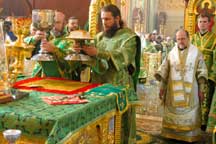
Communion in a Russian Orthodox church.
|
In my next post I’ll explore the meaning of Jesus’ statement that the cup is “[his] blood of the covenant.”
Part 20: The Perspective of Jesus (cont)
Posted at 10:00 p.m. on Thursday, May 13, 2004
The Blood of the New Covenant
As the Last Supper draws to a close, Jesus refers to the cup of wine as “my blood of the covenant, which is poured out for many” (Mark 14:24). This is an allusion to the story in Exodus 24, where the people of Israel endorsed God’s covenant. Then Moses, having sacrificed many animals, “took the blood and dashed it on the people, and said, ‘See the blood of the covenant that the LORD has made with you in accordance with all these words’” (24:7-8). The new covenant will also be ratified with blood, but in this case with the spilled blood of Jesus, who, like the lambs sacrificed in the first Passover, will give his life so that God’s people might be spared.
Jesus wasn’t the first one to connect the blood of the covenant with the coming of God’s kingdom. The prophet Zechariah made this same connection in a passage we associate with Jesus’ triumphal entry into Jerusalem: |
|
Rejoice greatly, O daughter Zion!
Shout aloud, O daughter Jerusalem!
Lo, your king comes to you;
triumphant and victorious is he,
humble and riding on a donkey,
on a colt, the foal of a donkey.
He will cut off the chariot from Ephraim
and the war horse from Jerusalem;
and the battle bow shall be cut off,
and he shall command peace to the nations;
his dominion shall be from sea to sea,
and from the River to the ends of the earth.
As for you also, because of the blood of my covenant with you,
I will set your prisoners free from the waterless pit. (Zech 9:9-11)
Because of God’s covenant with Israel, which was ratified with the blood of sacrificed animals, God’s king will rule over a global kingdom and God’s people will be redeemed from bondage. Jesus comes as the divinely-anointed king, not at first to lead Israel to victory, however, but to offer his own blood so that the new covenant and God’s universal kingdom might be inaugurated.
What is the nature of this new covenant? Here is the description from the Old Testament prophet Jeremiah:
The days are surely coming, says the LORD, when I will make a new covenant with the house of Israel and the house of Judah . . . I will put my law within them, and I will write it on their hearts; and I will be their God, and they shall be my people. No longer shall they teach one another, or say to each other, “Know the LORD,” for they shall all know me, from the least of them to the greatest, says the LORD; for I will forgive their iniquity, and remember their sin no more. (Jer 31:31, 33-34).
To sum up the meaning of Jesus’ actions and words in the Lord’s Supper, it’s as if he were saying:
- Even as God once saved his people from slavery in Egypt, so God is now saving his people from slavery to sin through me.
- Even as the blood of lambs once enabled death to “pass over” Israel, so my blood will lead to the forgiveness of sin.
- Even as the first covenant was sealed with sacrificial blood, so the new covenant will be sealed through my blood, poured out for many. I am choosing the way of death, Jesus says, so that the new life of the new covenant may come. My sacrifice will overcome the problem of sin, so that God’s kingdom may be established in all its fullness.
In my next post I’ll sum up what we have discovered about Jesus’ own perspective on the necessity of his death.
Part 21: The Perspective of Jesus (cont)
Posted at 10:15 p.m. on Friday, May 14, 2004
Summing Up
As we have seen, Jesus not only predicted his death, but also spoke of it as being necessary (e.g. Mark 8:31). Why? Why did Jesus think he needed to die? Here's a summary of our findings so far:
Jesus provides several different answers to this question. They include:
- Jesus believed that his death was the will of his Heavenly Father, so he chose to obey the Father’s will (John 10:17-18; Mark 14:36)
- Jesus believed it was his calling to “drink the cup” of God’s judgment, taking upon himself the righteous judgment of God upon the sin of Israel (and, indeed, all humanity) (Mark 10:38; 14:36).
- Jesus believed that his mission as the Son of Man was to serve rather than to be served, and in fact to give his life as a “ransom for many” (Mark 10:45). Thus he combined the Old Testament visions of the Son of Man (Daniel 7) and the suffering Servant of God (Isaiah 52-53).
- Jesus believed that his death was at the center of God’s plan for salvation, even as the exodus from Egypt was central to Old Testament salvation. Through his broken body and shed blood the new covenant would be inaugurated (Mark 14:22-25).
From a historical point of view, one can argue that Jesus died as the victim of Roman oppression or the machinations of Jewish leaders, or both. But from Jesus’ point of view, he was no victim at all. As the Good Shepherd, he chose to “lay down [his] life for the sheep” (John 10:15). “No one takes it from me,” Jesus said, “but I lay it down of my own accord” (John 10:18).
After the death and resurrection of Jesus, the earliest Christians reflected upon the meaning of his death. Basing their reflection upon what Jesus himself had taught, they saw his death as the crux of God’s plan for the salvation, not only of Israel, but also of the world. To the early Christian reflections I’ll turn in my next post. |
|
|
Jesus as the Good Shepherd. A portion of a stained glass window from Trinity Episcopal Church, Findlay, Ohio.
|
Part 22: The Perspective of the First Christians
Posted at 9:15 p.m. on Sunday, May 16, 2004
The Earliest Christian Reflection
We have very little direct information about what the very first believers in Jesus thought about his death and its meaning. Acts of the Apostles gives us a small window into this period of time, but not much more. The earliest of the New Testament writings are the letters of Paul. Yes, they come after the gospels in the Bible, but they were actually written before these accounts of Jesus ministry.
Several of the letters of the Apostle Paul were written around A.D. 50, or just about twenty years after the death of Jesus. These letters often contain earlier bits of Christian tradition, elements that get us back to within a very few years of Jesus himself. From these snippets of Paul’s letters we can learn what some of the very earliest Christians believed.
One of these passages occurs in 1 Corinthians 15. There refers to the core truth of the Christian faith, that which had been handed on to him from the first believers, and which he in turn passed on to the Corinthians. Then he quotes verbatim a portion of this tradition: |
|
| |
An ancient papyrus letter in Greek, not unlike Paul's own writings.
|
For I handed on to you as of first importance what I in turn had received: the Christ died for our sins in accordance with the scriptures, and that he was buried, and that he was raised on the third day in accordance with the scriptures, and that he appeared to Cephas, then to the twelve. (15:3-5)
Notice that the first statement of this creed-like formulation concerns the death of Jesus and it’s meaning: “Christ died for our sins in accordance with the scriptures.” His death was not simply a terrible accident or a result of his having offended Roman and Jewish authorities. Jesus died “for our sins,” both because of our sins and in order to insure our forgiveness.
How did the earliest Christians know this? Because it was “according to the scriptures.” Remember that the scriptures of the first Christians were not the writings of the New Testament, but rather the collection we know as the Old Testament. These Jewish scriptures, though written centuries before Jesus, nevertheless pointed ahead to his death and its purpose.
The first Christians didn’t make up this idea, of course. They got it from Jesus himself. During his earthly ministry he connected his death with the suffering Servant in Isaiah. There, as you may recall, the Servant “was wounded for our transgressions, crushed for our iniquities” (Isa 53:5). Indeed, the Servant of God “bore the sin of many” as he “poured out himself to death” (53:12).
Yet what Jesus said about his death prior to Good Friday was cryptic at best. That’s why none of his followers got it. After Easter, however, the resurrected Jesus himself explained to his disciples how the Old Testament foretold the necessity of his death (Luke 24:26). No doubt Isaiah 53 figured prominently in Jesus’ explanation, but it included far more, even “Moses and all the prophets” (24:27). So, following Jesus’ own example, the earliest Christians looked to the Old Testament for a way of understanding his death. And there they discovered, time and again, that Jesus died “for our sins.”
1 Corinthians 15 does not explain exactly how the death of Jesus was “for our sins.” The text doesn’t lay out some sophisticated notion of substitutionary atonement, for example. That we’ll find elsewhere in the New Testament. But in the simple language of earliest Christian reflection, we hear a clear and necessary connection between sin and the death of Jesus. He died, not only as a result of human sin, but also as a means for that sin to be forgiven. Through the death of Jesus, the new covenant was dawning, that of which Jeremiah prophesied:
The days are surely coming, says the LORD, when I will make a new covenant with the house of Israel and the house of Judah. It will not be like the covenant that I made with their ancestors when I took them by the hand to bring them out of the land of Egypt—a covenant that they broke, though I was their husband, says the LORD. But this is the covenant that I will make with the house of Israel after those days, says the LORD: I will put my law within them, and I will write it on their hearts; and I will be their God, and they shall be my people. No longer shall they teach one another, or say to each other, “Know the LORD,” for they shall all know me, from the least of them to the greatest, says the LORD; for I will forgive their iniquity, and remember their sin no more. (Jeremiah 31:31-34)
Our starting point for understanding the early Christian perspective on the death of Jesus is the basic statement that he died “for our sins in accordance with the scriptures.” Upon this foundation the first believers reflected further on the meaning of Jesus’ death. In my next post I’ll examine these additional reflections.
Part 23: The Perspective of the First Christians (cont)
Posted at 9:15 p.m. on Monday, May 17, 2004
The Means of Reconciliation
In my last post I examined one of the very earliest Christian statements of the purpose of Jesus’ death. According to the tradition encapsulated in 1 Corinthians 15, Jesus died “for our sins in accordance with the scriptures” (15:3). Yet this text doesn’t explicate further the way in which the death of Christ deals with the problem of human sin. For this explication we must turn to 2 Corinthians 5:16-21:
From now on, therefore, we regard no one from a human point of view; even though we once knew Christ from a human point of view, we know him no longer in that way. So if anyone is in Christ, there is a new creation: everything old has passed away; see, everything has become new! All this is from God, who reconciled us to himself through Christ, and has given us the ministry of reconciliation; that is, in Christ God was reconciling the world to himself, not counting their trespasses against them, and entrusting the message of reconciliation to us. So we are ambassadors for Christ, since God is making his appeal through us; we entreat you on behalf of Christ, be reconciled to God. For our sake he made him to be sin who knew no sin, so that in him we might become the righteousness of God.
This text assumes that our relationship with God outside of Christ is not a happy one. If we need to be reconciled to God, then we are not just out of touch with God, but alienated from him. Indeed, as Paul says rather bluntly in Romans 5:10, sin has made us God’s enemies. Many people today think that the basic human problem is merely a lack of knowledge of God. If we search for God, then we can find him and have relationship with him. But the biblical perspective is much bleaker. Yes, we lack knowledge of God. Yet this is only a symptom of a far deeper and in fact terminal disease – our eternal alienation from God because of sin.
So how does God deal with our sin, so that we might be reconciled to him? We find the answer in 2 Corinthians 5:21: “For our sake he made him to be sin who knew no sin, so that in him we might become the righteousness of God.” Though scholars continue to debate the precise nuances of this verse, its basic sense is clear. Allow me to paraphrase: “For our sake, God the Father treated Jesus as if he were sin itself, so that in Jesus we might experience right-relationship with God the Father, the kind of relationship that Jesus himself had with the Father.”
| When did the Father treat Jesus as if he were sin? In the crucifixion. Far more horrible than the physical pain Jesus experienced was the spiritual reality he endured, being forsaken by his Heavenly Father, entering into the very essence of Hell. This was necessary, not because Jesus himself deserved it, but because humanity deserved it. Yet in God’s amazing grace, Jesus’ suffering counted for all of us. In his death Jesus bore the sin of the world. So we read in 1 Peter 2:24: “He himself bore our sins in his body on the cross, so that, free from sins, we might live for righteousness; by his wounds you have been healed.” Behind the logic of 2 Corinthians 5:21 and 1 Peter 2:24 we find, once again, the image of the suffering Servant of God in Isaiah 53: “But he was wounded for our transgressions, crushed for our iniquities; upon him was the punishment that made us whole, and be his bruises we are healed.” |
|
| |
Jesus dying on the cross from The Passion of the Christ.
|
What is the result of Jesus’ being treated as if he were sin? We get to “become the righteousness of God” (2 Cor 5:21). Or, to put it differently, we are reconciled to God. That which once separated us from God and in fact made us God’s enemies – sin – has now been banished by Jesus’ sacrifice on the cross. Thus we can experience reconciliation with God, and this impacts everything in life. Indeed, when we’re in Christ, “there is a new creation” (2 Cor 5:17). Not only are we ourselves made new, but also we begin to live in the new creation of the future.
To sum up what we’ve seen in 2 Corinthians 5, Jesus had to die in order to regarded by God as if he were sin, so that we humanity might be reconciled to God and live in right-relationship with him. Through the death of Jesus, we experience personal renewal and, indeed, the beginnings of the renewal of all creation.
Part 24: The Perspective of the First Christians (cont)
Posted at 9:30 p.m. on Tuesday, May 18, 2004
An Act and Symbol of Love
Perhaps one of the most startling of the early Christian interpretations of the cross was that it was all about love. It’s easy in our day, when crosses are religious symbols, attractive ornaments, and trendy jewelry to associate the cross with love. But in the first century, crucifixion was about as far from love as you could get. To say that the cross – a horrid symbol of Roman oppression and barbarity – was a symbol of love was to speak like a madman (1 Corinthians 1:18-25). Yet this is precisely what the earliest Christians did, to the shock of their neighbors.
The Apostle Paul was one of the instigators of this paradoxical association of the cross with love. In Romans 5:6-8 he writes:
For while we were still weak, at the right time Christ died for the ungodly. Indeed, rarely will anyone die for a righteous person – though perhaps for a good person someone might actually dare to die. But God proves his love for us in that while we still were sinners Christ died for us.
If, Paul reasons, we had been absolutely wonderful and virtually sinless people apart from Christ, perhaps his death for us would have been merely sensible. But since we were in fact sinners, and as sinners estranged from God and even God’s enemies (Rom 5:10), the fact that Christ died for us becomes a stunning demonstration of God’s gracious love.
| But the cross is not merely a symbol of love. It isn’t just a sign that says, “God loves you.” It is also an act of love. Suppose, for example, you were drowning in a turbulent river. If a friend of yours erected a sign at that moment which read, “I love you,” you might feel a tiny bit grateful. Probably you’d wonder why your loving friend didn’t throw you a rope. At that moment you need, not just an indication of love, but an act of love. By dying on the cross, Jesus not only showed God’s love, but he acted in love toward us by taking our sin and dying in our place.
Indeed, the cross, which was once a terrifying symbol of Roman domination, becomes a symbol of divine love precisely because it was first the location of God’s supreme act of love in Christ. There has never been a more complete and astounding transition in symbolism. That which once sent shivers of fear and horror down the spines of Roman subjects now fills our hearts with gratitude and peace. What an astounding transformation of a symbol! |
|
| |
One of the most common symbosl of love in our day, which, interestingly enough, includes an element of implict pain in the piercing by the arrow.
|
Yet many in our day have a hard time associating the cross with love. Many non-Christian people – and even some Christians – who saw The Passion of the Christ came away from the movie saying, “I don’t see how a loving God could ever demand that Jesus die on the cross. The crucifixion of Jesus was all about Roman cruelty, not God’s love.” Unless we grasp the big picture of God's holiness and human sin, then we won't be able to understand the cross as an act and sign of love. It is only in light of biblical truth that we will come to grasp, though never to comprehend fully, the fact that Jesus died "for our sins in accordance with the scriptures" (1 Cor 15:3).
Part 25: Conclusion
Posted at 10:00 p.m. on Wednesday, May 19, 2004
Avoiding Historical Reductionism
In this series on the death of Jesus, I have presented four different perspectives on why Jesus had to die: Roman, Jewish, Jesus’, and Early Christian. I believe that each of these points of view has merit, and that we cannot fully understand the necessity of Jesus’ death without taking them all into account.
But many people today disagree. They prefer to accept one perspective as true, and reduce or deny other perspectives. You can see this, for example, in the letters to the editor in the date edition of TIME Magazine. These letters are responding to the cover story of the date edition, which posed the question, “Why Did Jesus Have to Die?” Consider this comment:
Jesus stood up to the injustices of the world and was crushed in the process. That is happening all over the world today, and not only to Christians. (L.O., Madison, Wis.)
| Now it’s certainly true that when people stand up to injustice, as L.O. observes, they are often crushed in the process. Remember, for example, the brave soul faced down a column of tanks in Tiananmen Square in 1989. He, as it turns out, wasn’t killed for his effort. But other students who protested against the Chinese government were put to death for their efforts. Yet L.O.’s explanation of Jesus’ death, however true, doesn’t go nearly far enough, either historically or theologically. |
|
| |
The brave protestor facing the tanks in Tiananmen Square. |
A pastor from New York City gets the historical point in his letter to TIME:
It is inappropriate to look for explanations of Jesus' death that blame God. . . . Jesus died because those in power ordered him killed. They could not tolerate someone who challenged the status quo as forcefully and thoroughly as Jesus was capable of doing. (Rev. D. C., New York City)
Rev. D.C. is also correct, to a point. Jesus did die because he challenged the status quo, and therefore people in power ordered him killed. But the Reverend mistakenly believes that this historical explanation tells the whole story. It doesn’t. At least it doesn’t if we take seriously the perspective of Jesus and early Christians. It’s not “inappropriate” to look for theological explanations that “blame” God (though the word “blame” misses the biblical nuance), even though we can accept historical explanations that blame people.
Yet, even as we allow for divergent perspectives on the reason for Jesus’ death, the New Testament presents the theological reason as foundational bedrock. Though it’s true that Jesus died “because those in power ordered him killed,” this answer doesn’t get to deepest truth. The bottom line is this, according to the New Testament: Jesus died for our sins, in fulfillment of God’s plan for salvation. The human agents who killed Jesus, though acting freely and responsibly, were, nevertheless, unwittingly carrying out the divine plan (1 Corinthians 2:8).
By claiming that the theological reason for Jesus’ death is somehow more basic than others, I’m not thereby denying the importance of historical explanations, but simply placing them in what I believe to be the ultimately proper context. You haven’t really grasped the reason for Jesus’ death until you’ve seen it in light of God’s plan. Of course the theological rationale for the necessity of Jesus’ death is also something that goes beyond historical proof. I can show you on the basis of historical data that early Christians believed Jesus’ death was part of God’s plan, but I can’t prove that this belief is true. If one takes the New Testament as God-breathed and authoritative, as I do, then one will accept that what the early Christians believed is also reflective of God’s own perspective.
Ironically, the immense impact of Mel Gibson’s The Passion of the Christ has made it both harder and easier to accept the idea that Jesus’ death was part of God’s plan for salvation. The film has made it harder because it exposes us to the brutal, bloody reality of crucifixion. As I have argued elsewhere, The Passion of the Christ has forced people in this day to confront the scandal of the cross. Yet this film has also made it easier for some people to see Jesus’ death as an expression of God’s loving plan. Almost all of those who view The Passion through the eyes of faith come away with a much deeper sense of God’s love and grace. They don’t blame the Jews for killing Christ, or Pontius Pilate, or even God. Rather, they take the blame on their own shoulders, realizing the Jesus died for their sins. Ask a Christian walking out of the movie why Jesus had to die, and he or she will almost always say, “For my sin. I put Jesus on the cross. Jesus had to die for me.”
What’s the result of this confession? I’ll let the classic words of Isaac Watts answer this question, and conclude this series:
When I survey the wondrous cross,
On which the Prince of glory died,
My richest gain I count but loss,
And pour contempt on all my pride.
Forbid it, Lord, that I should boast,
Save in the death of Christ my God;
All the vain things that charm me most,
I sacrifice them to his blood.
See, from his head, his hands, his feet,
Sorrow and love flow mingled down;
Did e’er such love and sorrow meet,
Or thorns compose so rich a crown.
Were the whole realm of nature mine,
That were a present far too small;
Love so amazing, so divine,
Demands my soul, my life, my all.
Home |